Key takeaways
- AI integration with legacy systems reveals hidden technical debt and risk
- Most legacy platforms resist plug-and-play AI solutions
- Business value trumps technology for successful AI projects
- Incremental, use-case-driven modernization outperforms big-bang approaches
- Clear ROI and governance reduce the risk of costly AI missteps
Can AI and Legacy IT Really Work Together?
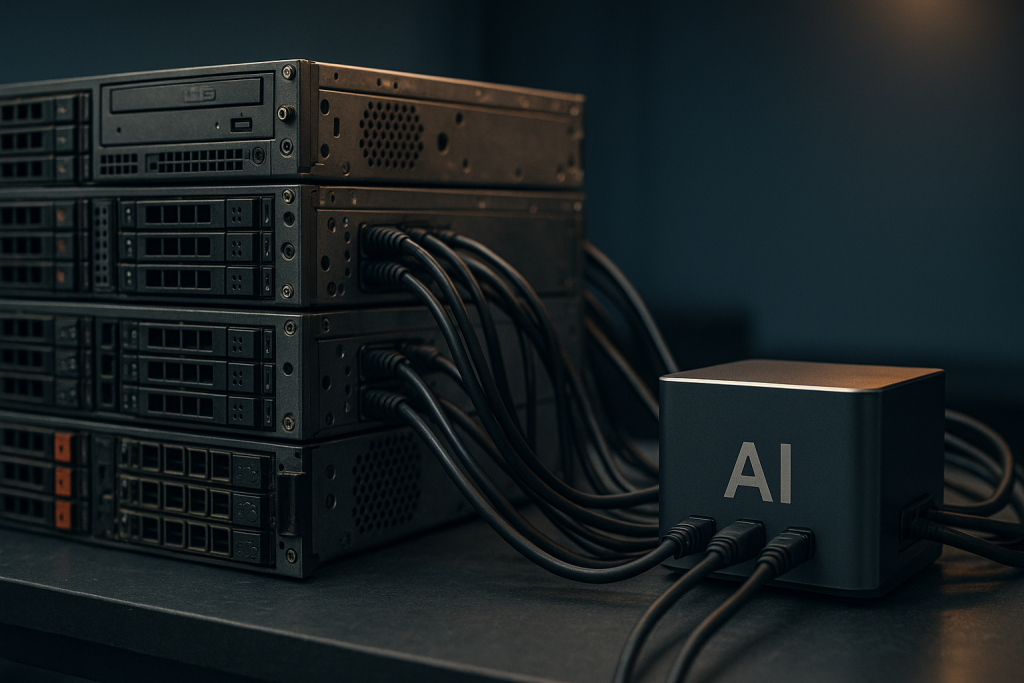
AI and legacy systems are natural adversaries. Too many CIOs chase the AI hype, hoping for quick wins. The reality: integrating AI into old platforms exposes hidden risks, technical debt, and real limits. But it can work—if business value leads, not technology dogma. Here’s how to make AI deliver in brownfield IT, without risking your core business.
Definition: Integrating AI into legacy systems means embedding modern AI capabilities—like prediction or automation—into established, often outdated, enterprise technologies. The challenge is bridging the gap between decades-old code and today’s smart algorithms, without breaking what already works.
Why Do Legacy Systems Make AI Integration So Difficult?
Legacy systems are stubborn for a reason. Many run on outdated platforms or code, with decades of workarounds, patches, and undocumented rules. These environments resist change, especially when it comes to complex, data-hungry AI models. Imagine trying to run a self-driving module on a car built in the 1980s—with a carburetor and no sensors. That’s the reality in many enterprises.
Most legacy platforms weren’t designed for real-time data streams or cloud-based AI APIs. Their data is often siloed, inconsistent, or locked in proprietary formats. As a result, plugging in a modern AI solution is rarely a matter of flipping a switch. The effort required to make old and new talk can expose just how fragile critical business operations are.
What Happens When You Force AI into Legacy Environments?
When AI projects ignore the constraints of legacy IT, the result is predictable: delays, budget overruns, and frustrated teams. I’ve seen enterprises invest months trying to connect AI-driven forecasting to ancient ERP databases. The data was incomplete, quality was poor, and every integration revealed new bugs. The result? The shiny AI dashboard worked—sometimes—but nobody trusted the predictions.
Worse, forced integrations can destabilize legacy systems. A new AI service might overload an old mainframe, or trigger obscure bugs in custom code. The risk isn’t just technical—it’s operational. When customer orders can’t be processed, or compliance reports fail, the business pays the price.
Why Do Typical AI Integration Approaches Fail?
Many vendors sell the dream of plug-and-play AI. In reality, most AI tools assume modern infrastructure, open APIs, and clean data. That’s rarely what legacy systems offer. Off-the-shelf connectors may work in simple cases, but they buckle under enterprise complexity.
A common pitfall: treating AI as a black box that simply replaces legacy logic. This ignores the process knowledge embedded in decades-old code—and the fact that legacy systems often handle exceptions and edge cases better than new AI modules. AI projects that skip stakeholder buy-in and process mapping end up with shadow IT, workarounds, or outright rejection from users.
What’s a Smarter, Business-First Approach to AI Integration?
The most successful AI integrations start with business value, not technology. Instead of replacing everything, focus on high-impact use cases where AI can augment legacy processes. For example, use AI-driven document classification to accelerate invoice processing, without touching the core ERP logic.
Treat legacy systems as stable platforms, not obstacles. Build thin integration layers—such as APIs or data pipelines—that allow AI models to operate alongside, rather than inside, legacy code. Pilot on non-critical processes first. Measure outcomes in terms of productivity, error reduction, or customer satisfaction, not just technical success.
How Can Enterprises Manage Risk and Complexity?
AI in legacy environments multiplies risk—technical, operational, and legal. Mitigation starts with clear governance: define who owns which data, who validates AI outputs, and how errors are handled. Build monitoring and fallback mechanisms. If the AI fails, can the legacy process take over seamlessly?
Documentation is your friend. Map out data flows, decision points, and interfaces. Involve the teams that actually maintain the legacy stack—without their insights, surprises are guaranteed. Regular audits and staged rollouts catch issues early, before they reach production.
What’s the Real ROI of AI in Legacy IT?
The lure of AI is automation and insight. But in legacy-heavy environments, ROI comes from targeted improvements, not wholesale replacement. For example, automating manual data entry in a legacy CRM can save hours weekly, even if the core system remains untouched.
Real ROI comes when AI reduces bottlenecks, improves quality, or unlocks new insights from old data. But it’s a marathon, not a sprint. Most cost and productivity gains accrue from incremental, well-scoped projects—not from risky big-bang transformations. Treat each use case as an experiment, with clear metrics and business sponsorship.
Where Should You Start—and What Comes Next?
Start where the pain is greatest. Look for processes where manual effort, errors, or delays hurt business outcomes. Build one or two small AI pilots with clear business owners. Use the lessons to inform a broader roadmap.
Long-term, AI integration is a lever for gradual modernization. Each successful use case builds confidence and skills. Over time, enterprises can replace brittle point-to-point integrations with robust APIs or microservices. But the endgame isn’t a fully AI-native stack—it’s a business that extracts value from both old and new technology, without betting the farm.
Conclusion: AI Integration Is a Management Task, Not an IT Experiment
Integrating AI into legacy systems isn’t glamorous. It’s slow, careful work that rewards pragmatism and punishes shortcuts. But done right, it delivers real, measurable business value—and avoids the hype-driven disasters that litter the IT landscape. My Rat: Focus on use cases, involve your business owners, and treat legacy as a resource, not a roadblock. Start small, measure outcomes, and scale what works. That’s how you make AI pay off, even in the oldest IT environments.
FAQ
What are the main risks when integrating AI into legacy systems?
Key risks include technical incompatibility, data quality issues, system instability, and unclear ownership of AI outputs. Careful planning and governance reduce these risks.
Is it possible to fully modernize legacy systems with AI?
Full modernization is rare and risky. It’s more practical to layer AI capabilities on top of stable legacy processes, gradually modernizing over time.
How should enterprises prioritize AI projects for legacy environments?
Prioritize by business pain points and potential ROI. Start with small, focused use cases that improve efficiency or quality, then scale successful pilots.
Do AI integrations always require cloud migration?
No. While cloud can simplify integration, many AI models can run on-premises or in hybrid setups. The key is matching architecture to business needs, not following trends blindly.